The After-Hours Problem
If you run a service business in Singapore, you already know the pattern. Your phone rings busiest between 6pm and 9pm, exactly when your staff have gone home. Patients, customers, and clients call after their own workday ends because that is the first free moment they have.
The calls that come in during these hours are not casual enquiries. They are people ready to book. A patient who needs to see a doctor this week. A homeowner with a leaking pipe. A couple looking for a dinner reservation tonight. These callers have immediate intent, and the first business that answers gets the booking.
What Most Businesses Do (And Why It Does Not Work)
The most common approach is voicemail. It costs nothing, but it also captures almost nothing. Industry data shows that the majority of callers who reach voicemail for a service business hang up and call someone else. They are not being disloyal. They just need the service, and they will book with whoever picks up first.
The second approach is hiring evening staff. This works but the economics are difficult. Paying a receptionist to cover 6pm to 9pm (three hours) plus weekends means significant payroll for limited coverage. And you still have no coverage during public holidays or the hours between 9pm and 8am.
The third approach is a traditional answering service. Human operators answer your calls, which is better than voicemail. But they cannot book appointments, check your calendar, or answer detailed questions about your services. They take messages, and by the time you follow up the next morning, many callers have already booked elsewhere.
How AI Changes the Equation
An AI receptionist answers every call, at every hour, in every language your customers speak. It does not need overtime pay, does not call in sick, and does not take public holidays off.
But the real advantage is not just answering. It is acting. When a caller at 8pm wants to book a dental appointment for Thursday, the AI checks your calendar and books it. When someone calls at 10pm to ask about your restaurant's menu, the AI gives them accurate answers and takes a reservation. When a homeowner calls at 6am with a burst pipe, the AI captures the job details and triggers your emergency dispatch process.
The calls are not just answered. They are handled.
The Revenue Impact
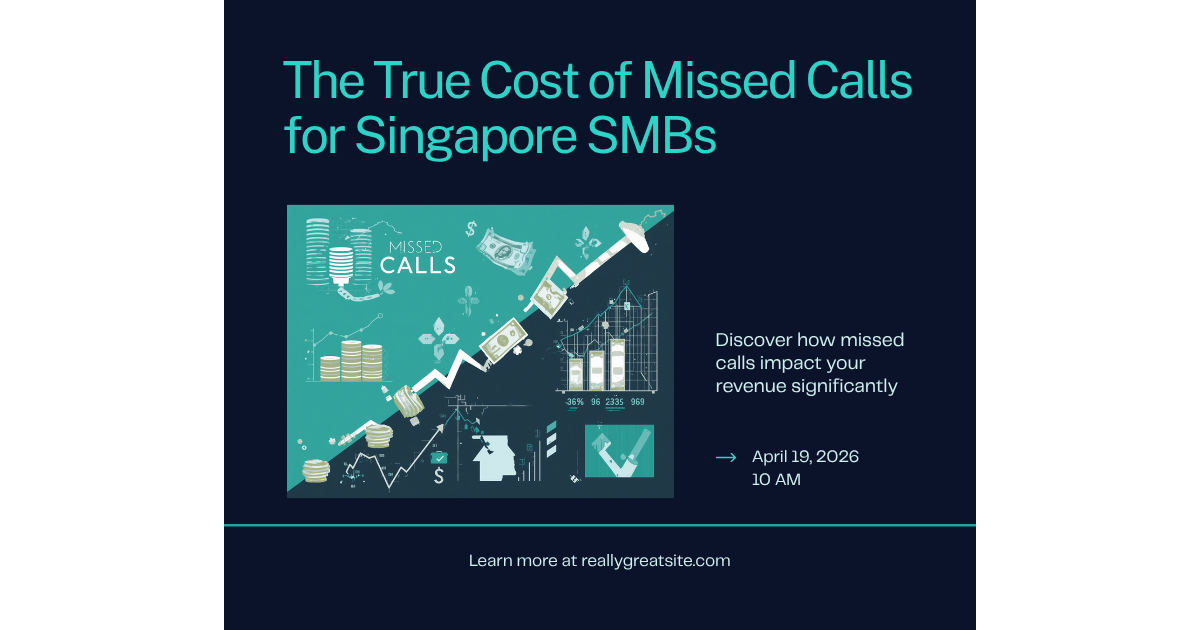
Let us put real numbers to this. A specialist clinic in Singapore was receiving approximately 8 missed calls per evening. At an average consultation value of SGD 200 and a 30 percent conversion rate, the clinic was losing over SGD 9,000 per month to after-hours missed calls alone.
Within the first week of deploying an AI receptionist for after-hours coverage, the clinic captured 23 bookings that would have been lost. The monthly subscription to the AI service was recovered in the first three days.
For restaurants, the numbers are similar. Missing 5 reservation calls per evening at an average table value of SGD 200 adds up quickly. Even at a 30 percent conversion rate, that is over SGD 7,800 per month in lost revenue.
Our detailed missed call cost analysis provides the full framework for calculating your specific numbers.
How to Implement After-Hours AI
The simplest deployment model is after-hours only. Your phone system forwards calls to the AI when your office is closed, and your human staff handle calls during business hours. This is how most businesses start.
Setup typically takes one to two weeks. The AI needs to be configured with your business information, services, pricing, availability, and any special rules (like which calls should trigger emergency alerts versus which can wait until morning).
Once live, you can expand coverage. Many businesses that start with after-hours only end up using the AI during peak hours too, when their staff are busy with in-person customers and cannot answer the phone.
Languages Matter in Singapore
After-hours callers in Singapore are particularly likely to call in their preferred language. During business hours, callers might default to English because they expect an English-speaking receptionist. After hours, they are more natural, calling in Mandarin, Bahasa, or a mix.
A good AI receptionist handles all three, detecting the caller's language and switching automatically. This is a significant advantage over both voicemail (which typically has a single-language greeting) and traditional answering services (which may only offer English operators).
Our multilingual AI receptionist guide covers the language capabilities in detail.
Getting Started
The fastest path is to start with after-hours coverage only. You capture the lost revenue from evening and weekend calls without changing anything about your daytime operations. Once you see the results, you can decide whether to expand coverage.
Check whether your setup qualifies for the PSG grant, which can offset a significant portion of the cost. Our PSG guide walks you through the eligibility criteria.
Talk to Us
Chat with us on WhatsApp to discuss after-hours coverage for your business. We reply within one Singapore business day.