Singapore's AI Adoption Gap Is Both a Challenge and an Opportunity
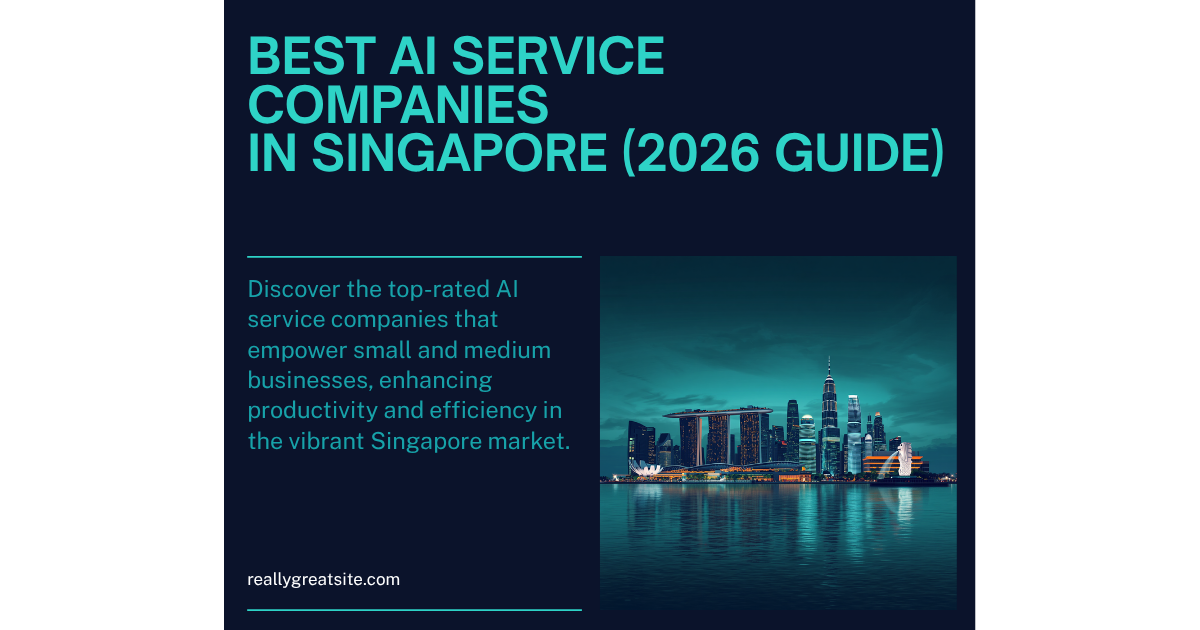
Singapore has positioned itself as Southeast Asia's AI hub. The government has invested billions through the National AI Strategy 2.0, Smart Nation initiatives, and grants like the Productivity Solutions Grant. Global AI companies are setting up regional headquarters here. The infrastructure is in place.
Yet adoption among SMBs tells a different story. While large enterprises and startups have embraced AI aggressively, the vast middle of Singapore's business landscape, the clinics, restaurants, service companies, and retailers that make up the SMB backbone, has been slower to move. Industry surveys suggest that while awareness of AI is near-universal, active adoption with measurable business impact remains in the minority.
This gap represents a massive opportunity for the SMBs that do adopt. In a market where most of your competitors have not yet implemented AI for their phone answering, customer service, or search visibility, being among the early adopters gives you a disproportionate competitive advantage.
Where Adoption Is Highest
Technology and Professional Services
Unsurprisingly, technology companies and professional services firms lead AI adoption. These businesses have the technical capability to evaluate and implement AI tools, and many of their use cases (code development, document analysis, research, content creation) align naturally with AI capabilities.
Ecommerce and DTC Brands
Online businesses have been relatively fast adopters, particularly for AI-powered customer service (chatbots on websites and WhatsApp), content generation (product descriptions, social media, email), and increasingly, AI search optimisation.
Healthcare
Healthcare has seen strong adoption of AI for specific use cases: appointment booking, phone answering, patient communication, and clinical decision support. The combination of high call volumes, high value per appointment, and clear ROI makes AI an easy business case for clinics.
Where Adoption Lags
F&B
Despite being one of the industries that would benefit most from AI phone answering (high call volumes, peak hour chaos, staff shortages), F&B adoption remains low. The primary barrier is not technology skepticism but operational inertia. Restaurant owners are focused on daily operations and have not had time to evaluate AI options.
Traditional Retail
Brick-and-mortar retailers have been slow to adopt AI beyond basic POS analytics. The opportunity in AI customer service, inventory optimisation, and personalisation remains largely untapped.
Home Services
Plumbers, electricians, and contractors are among the highest-impact use cases for AI phone answering, yet adoption is low. The barrier is typically awareness rather than resistance. Most home services business owners have not encountered an AI phone solution designed for their industry.
The Common Barriers
"I Don't Know Where to Start"
The most frequently cited barrier is not cost, technology, or skepticism. It is simply not knowing where to begin. The AI landscape is overwhelming, and most SMB owners do not have the time or technical background to evaluate options systematically.
Our decision framework for choosing AI services and no-jargon AI guide are designed to address exactly this barrier.
"It Is Too Expensive"
Many SMB owners assume AI requires a large upfront investment. In reality, AI SaaS tools are often cheaper than the problems they solve. An AI receptionist costs less per month than the revenue lost to a single day of missed calls. And the PSG grant can offset a significant portion of qualifying costs. Our PSG guide explains the process.
"My Customers Want to Talk to a Human"
This is a legitimate concern, but it is often overstated. Modern AI voice systems are conversational and natural, and most callers care about getting their problem solved quickly rather than who or what solves it. Businesses that deploy AI phone answering consistently report high caller satisfaction.
The key is implementing AI that handles routine calls well and transfers complex or emotional calls to humans gracefully.
"I'll Wait Until the Technology Matures"
The technology is mature enough today to deliver measurable ROI for standard business use cases. Waiting means losing revenue to missed calls, losing customers to competitors who appear in AI search results, and falling further behind in a market that rewards early adoption.
What the Early Adopters Have in Common
The Singapore SMBs successfully using AI share several traits. They started with one specific use case rather than trying to adopt AI across the board. They chose a provider with local market expertise rather than a generic global platform. They measured results against specific metrics rather than vague "efficiency" goals. And they iterated, starting with a small deployment and expanding based on proven results.
The Opportunity Ahead
For Singapore SMBs that have not yet adopted AI, the window of opportunity is still wide open. The businesses that implement AI phone answering, search optimisation, or customer service chatbots in the next 12 months will capture market position while most competitors are still evaluating.
The cost of entry is modest, particularly with PSG grant support. The ROI for well-chosen use cases is measurable within weeks. And the competitive advantage compounds over time as your AI systems improve and your competitors remain on manual processes.
Read our guide to the best AI companies for Singapore SMBs to find the right provider for your needs.
Talk to Us
Chat with us on WhatsApp to discuss how AI can fit into your business. We reply within one Singapore business day.